Monday, 6 January 2014

First Flying Car

FIRST Flying car on sale in 2015

http://bit.ly/1bM3rga

The first flying car is expected to go on sale in 2015. I guess this brings a new era in Automobile industry.

Sunday, 26 May 2013

Friday, 12 April 2013

The fastest $treet-legal sports Car


The Swiss company Weber Sportscars has presented the fastest street-legal sports car ever. The F 1 supercar combines a cutting-edge technology and bespoke design.

The Swiss supercar is powered by a V10 engine with dual superchargers delivering the impressive 1200 hp / 882.35 kW. The two-seater features power-to-weight ratio of Weber Sportscars`s masterpiece accelerates from 0-62 mph (0 - 100 Km/h) in 2.5 s. It reaches a maximum speed of 400 Km/h.

The mid-engine racer weight in only 1,250 kilograms and comes with a sophisticated aerodynamic properties. The supercar is 204 centimeters wide and 115 centimeters high.

The monocoque is made out of ultra-light yet rigid carbon fiber. This component offers a maximum directional stability at the high speeds.

TECHNICAL SPECIFICATIONS  

Chassis:
Two-seater mid-engine sportscar with intelligent all-wheel drive

High tensile WEBER SPORTCARS carbon monocoque with integrated safety cell. reinforced with high strength chrome molybdenum tubes usually reserved for aero-space applications. The exact design was determined using FEM (finite element method) computer software.   Weight of the entire carbon monocoque: 65 kilograms.


Bodywork:
Two-door bodywork entirely made from Carbon. Air brake via a rear wing deploying into fully vertical position in 40 milliseconds.

Wing:
Active Aero Control, adaptive hydraulik wing, also for breaking.
Active four whell motion control

Dimensions:
Lenght: 4500 mm
Width: 2040 mm
Height:  1150 mm
Curb weight: 1250 Kg
 
Engine:
V10-cylinder 4-valve light alloy engine with electronic WEBER SPORTCARS injection and two turbo chargers with intercooler.

Zylinder angle: 90 Degree
Camshaft drive: Chain
Displacement: 5600 cm3
Bore: 87.65 mm
Stroke: 92.8 mm
Compression-Ratio: 9.0 : 1
Max. Power: 1200PS/882.3 kW b.7000 rpm
Max. Torque: 1250 Nm at 4200 rpm
Power output per liter: 240BHP/L / 176.47 kW/L
Fuel: Super plus (98 ROZ)
Fuel capacity: 110 Liter
Engine oil capacity: 15 Liter
Cooling water capacity: 29 Liter
Chargersystem:
2 WEBER SPORTCARS turbo chargers
Max. boost:
Max 2.0 bar
Injection:
Electronically controlled WEBER SPORTCARS injection
Exhaust system:
WEBER SPORTCARS stainless steel high performance exhaust system including special manifolds and high performance metal-bed catalytic converters. Sound management via electronically controlled throttle system
Motormanagement (ECU):

Bugatti Veyron gets an invisible protection foil by WrapStyle

This ultra-precious Bugatti Veyron gets an invisible protection foil by WrapStyle company.  This material offers professional paint protection and is a highly demanded innovation.  It also prevents corrosion in places where it is applied.

The foil is UV stable and does not change its color. The invisible material is completely removable. Durability is up to 5 years.

There are 3 types of foil protection:
l.Stoneprotect foil 100 mic. It is perfect in normal operation. It is available in gloss or matt.
ll. Polyaliphatic foil 137 mic. It protects your vehicle when exposed to extreme conditions in business or sports.
lll. Polyaliphatic foil 200 mic. This film features the strongest protection.


Thursday, 11 April 2013

Rolls Royce Jonckheere Aerodynamic Coupe II

The mysterious Rolls Royce Jonckheere Aerodynamic Coupe II is a creation of the designer Ugur Sahin. The car is a contemporary interpretation of the Rolls-Royce Phantom I Aerodynamic Coupe produced by the Jonckheere Works in Belgium in 1935. The car was destroyed during the Second world war.

In fact, the latest car is a piece of art that uses long hood and short body. The second edition of the Rolls Royce Jonckheere Aerodynamic Coupe differs from the original with redesigned front fenders, headlights and the fin at the rear. The designer kept the eccentric appearance, the shape and proportions of the first Jonckheere Aerodynamic Coupe. Ugur Sahin used the original round doors that are the car`s trademark. The extraordinary vehicle can be seen at Peterson Museum in California

Friday, 28 September 2012

2013 Porsche Boxster S - Road Test

Taming the Tail of the Dragon—and finding some better alternatives—in the all-new second-generation Boxster.


Only by the grace of lucky scheduling did we miss the three-day, fourth annual “OutSMARTing The Dragon” event, where dozens, perhaps hundreds, of Smart cars from across North America chug up and down the Tail of the Dragon, the 11-mile, 318-turn stretch of Highway 129 that sits partly in Tennessee, partly in North Carolina, just west of the Great Smoky Mountains National Park.
After all, we picked up a 2013 Porsche Boxster S in Atlanta and were looking for a place to wring it out. Where better, we thought, than the famous, infamous Tail of the Dragon?
 Unfortunately, so did about a zillion other people, Smart cars or not. If you haven’t been on Tail of the Dragon in the last 15 years or so, you’ll find it’s like when your favorite little restaurant gets discovered and you can no longer get a table. Tail of the Dragon may not have jumped the shark yet, but Fonzie is sizing up the ramp. Nearly 500,000 vehicles a year traverse the little two-lane road where the speed limit is 30 mph. Since traffic declines considerably during the winter, the Tail is packed during the summer, even—as we found out—on weekdays.
 We parked the Boxster at the Deal’s Gap Motorcycle Resort, a small motel, general store and service station at the south end of the Tail, a near-mandatory stop for anyone in the area, but open only from March 1 to the end of November. This is where you get a sense of who will be joining you on your trip up and down the Tail—a stunning majority of Harley-Davidson riders, many on rented bikes, here to mark the Tail of the Dragon off their bucket list. If for no other reason, stop at the Resort to see the “Tree of Shame,” where bits and pieces of crashed motorcycles and cars dangle like Christmas ornaments.

Though outnumbered by bikers, there were some sports cars on the Tail, including a pair of BMW M3s, bristling with GoPro cameras, driven by two German tourists. There was also an older Boxster parked at the Resort—the driver’s girlfriend kept pointing at our 2013 model. The boyfriend refused to acknowledge it.
With virtually no place to pass legally on the Tail, you’ll find 30-mph speed limit actually optimistic as soon as you drive up on a pack of Harley riders, which takes about four of the 318 turns. Or worse, we ended up behind one rag-tag pack of motorcycles trailed by a green Kawasaki dirt bike on knobby tires.

Inside, our Boxster S had plenty of room for two adults—width, after all, is nearly 78 in.—with ample cubbyholes for storage. Most sports car owners would be happy with the space in the Boxster’s front or rear trunk, but combined, the nearly 10 cu. ft. seems downright generous.
The seats in the test car were superb, but they should be, as the leather-covered Adaptive Sports Seats were a $5265 option—on top of the $2455 Porsche charged for the leather, plus another $730 for seat ventilators. If you get the idea that the Boxster S’s window sticker can add up quickly, you’re right: More about that in a moment.

On the highway, the Boxster S serves up a surprisingly supple ride, unless you insist on hitting the “Sport” or “Sport Plus” buttons. We used Sport in the mountains, as Sport Plus stiffens up the ride considerably and makes the PDK shift in such an aggressive manner that the car seemed nervous. Sport Plus is useful on a racetrack—and it worked quite well during lapping sessions at Barber Motorsports Park during the Boxster’s initial press introduction—but in any other application, unless you are 18 years old and insist on cranking the stereo up to 11, and keeping your foglights on all day, you will likely find Sport Plus too busy and high-strung for daily driving.
In the hills, steering is spot-on, with just the right feedback and effort. The big brakes—13-in. vented rotors up front, 11.8-in. in the back, both with 4-piston calipers—are linear in feel and stayed cool even during track sessions. The 20-in. Pirelli tires—an inch larger than standard on the S—were quiet and grippy even in the rain. At just over 3100 lb., the Boxster S feels particularly light on its feet. We shifted the PDK manually on occasion, but when it’s left to shift on its own you’ll be startled by how perceptive the PDK is. With no need to shift manually, you can turn your full attention to the winding road.
For our 800-mile trip, we averaged nearly 21 mpg, and that includes a lot of spirited driving. We genuinely like the 2013 Boxster S, and consider it to be, for the first time, a legitimate alternative to a 911. At the starting price of $60,900 ($11,400 more than the base Boxster), plus $950 in shipping, it’s almost a bargain. But our loaded-up Boxster S listed for a sobering $88,585, and you can option out a Boxster to over $100,000—which moves it into legitimate 911 territory.
Aside from one makeover, this is the first genuinely new Boxster since its 1997 introduction. To say it’s a success is an understatement. But watch those options closely.
 Courtesy:
Steven Cole Smith / Photos by Guy Spangenberg

Saturday, 25 August 2012

Celebrities prefer Lamborghini style

Celebrities at Cannes Film Festival obviously prefer Lamborghini style. VIP guests such as Ronan Keating, Benicio Del Toro, Emir Kusturica, Shia LaBoeuf, James Wang, Isabella Ferrari, Brandon Cronenberg, John Boorman, Jimmy Jean-Louis, Laura Michelle Kelly, Jim Kerry came to the event with a Lamborghini supercars.
 Jimmy Jean Louis leaving the Hotel Martinez on a Lamborgini Gallardo.


 Director Emir Kusturica driving a white Lamborghini Gallardo.


Fire from the belly DTM Style - Martin Tomczyk's BMW Motorsport DTM car lights up the exhaust during the Zandvoort round. (Photo: BMW Motorsport)

Veeco RT – Electric tricycle

The vehicle is designed and manufactured in Portugal, is a joint development of VE local company and one of the largest technical universities in Lisbon. One of the main tasks of the producers was to construct a good looking car that differs from other elektrichki market. So they bet on tricycle with two wheels in front and one behind. The rear wheel is connected to an electric charge to drive the vehicle.
Its power is just 108 hp, but thanks to the torque of 450 Nm, Veeco RT is able to accelerate from standstill to 100 km / h in just 8 seconds. The maximum speed is 160 km.

FXX

The FXX is the fruit of Ferrari's know-how in building special, limited-series sports cars combined with its racing experience. The car will provide the basic framework on which the specifics of future extreme models will be worked out.

The exceptionally powerful FXX delivers absolutely blistering performance on all fronts. The FXX has not been homologated for road use, and thus will not be a competition model. It will be used exclusively on the track as part of a specificongoing research and development programme, featuring this first-ever group of Client Test Drivers. The FXX is powered by an imposing 6,262 cc V12 engine that can punch out over 800 hp at 8,500 rpm.


Its gearbox is the result of the transfer of F1 strategies, delivering gear-change times of under 100 ms. This is almost as fast as the F1 single-seaters, themselves the absolute pinnacle of current technological achievement.

The FXX's aerodynamic design is particularly innovative too, resulting in a shape that produces 40% higher down-force than ever achieved before. It is also possible to adjust the FXX's mobile spoiler configuration to suit the specific circuit.

(Source: Ferrari)

Sunday, 24 June 2012

2012 Ferrari F12 Berlinetta: Geneva 2012


Ferrari claims that its new F12 Berlinetta is the most powerful and high-performance road car ever.


Performance

     The heart of the F12 Berlinetta is the naturally aspirated 6,262cc V12 engine, which develops 730bhp at  8,500rpm and 509lb ft of torque at 6,000rpm. The power unit is coupled with Ferrari's F1 dual-clutch paddle-shift transmission. The car accelerates from 0-62mph in 3.1sec with a top speed of 211mph.

Design
The F12 Berlinetta features a shorter wheelbase than the 599 that replaces. The two-seater has compact exterior dimensions – it is 4,618mm long and 1,942mm wide.
Ferrari has worked with Scalietti to develop an all-new spaceframe chassis using 12 different kinds of alloy. That results in 20 per cent increase in structural rigidity as well as a 70kg weight reduction.
The Ferrari F12berlinetta features new aerodynamic devices such Aero Bridge and Active Brake Cooling. Some of the highlights are a Carbon-ceramic brakes, and adaptive damping and electronic control systems (E-Diff, ESP Premium and F1-Trac).


Renault Alpine A110-50 concept


Renault Alpine A110-50 concept


Leaked rendering pictured revealed the Renault Alpine A110-50 concept. The sports car is a celebration of the 50th anniversary of the Renault Alpine A110. The concept is based on a Renault Megane Trophy racer with a tube-frame chassis. The two-seater will boast 400-horsepowers and 310 lb-ft of torque that will come from a V6 engine.

Thursday, 21 June 2012

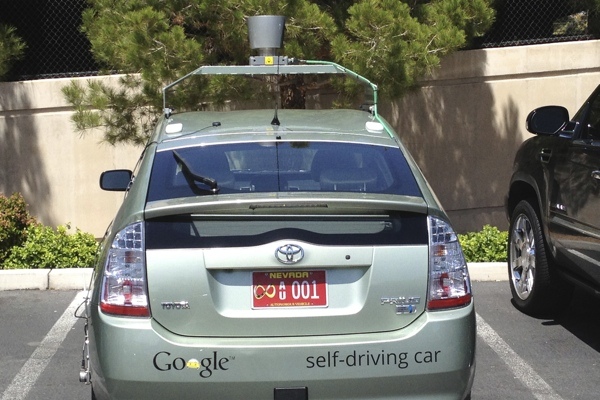
Driverless Cars


Fully autonomous vehicles, also known as robotic cars, or driverless cars, already exist in prototype, and are expected to be commercially available around 2020. According to urban designer and futurist Michael E. Arth, driverless electric vehicles—in conjunction with the increased use of virtual reality for work, travel, and pleasure—could reduce the world's 800 million vehicles to a fraction of that number within a few decades. This would be possible if almost all private cars requiring drivers, which are not in use and parked 90% of the time, would be traded for public self-driving taxis that would be in near constant use. This would also allow for getting the appropriate vehicle for the particular need—a bus could come for a group of people, a limousine could come for a special night out, and a Segway could come for a short trip down the street for one person. Children could be chauffeured in supervised safety, DUIs would no longer exist, and 41,000 lives could be saved each year in the US alone.


 Google Driverless Car

The Google Driverless Car is a project by Google that involves developing technology for driverless cars. The project is currently being led by Google engineer Sebastian Thrun, director of the Stanford Artificial Intelligence Laboratory and co-inventor of Google Street View. Thrun's team at Stanford created the robotic vehicle Stanley which won the 2005 DARPA Grand Challenge and its US$2 million prize from the United States Department of Defense. The team developing the system consisted of 15 engineers working for Google, including Chris Urmson, Mike Montemerlo, and Anthony Levandowski who had worked on the DARPA Grand and Urban Challenges.


While Google had no immediate plans to commercially develop the system, the company hopes to develop a business which would market the system and the data behind it to automobile manufacturers. An attorney for the California Department of Motor Vehicles raised concerns that "The technology is ahead of the law in many areas," citing state laws that "all presume to have a human being operating the vehicle". According to the New York Times, policy makers and regulators have argued that new laws will be required if driverless vehicles are to become a reality because "the technology is now advancing so quickly that it is in danger of outstripping existing law, some of which dates back to the era of horse-drawn carriages".

Friday, 25 May 2012

Mclaren in YAS Marina Circuit, Abu Dhabi


To celebrate the opening of the fourth of six planned McLaren dealerships in the Middle East, McLaren Automotive has released these stunning images of the car in the desert, on city streets and on the track, three places the MP4 12C is supremely confident.

There's also a fantastic video on YouTube at::http://www.youtube.com/watch?v=XF6fHZncjYc